India Advances Nuclear Capability with Agni-5 MIRV Test

Test Details and Implications
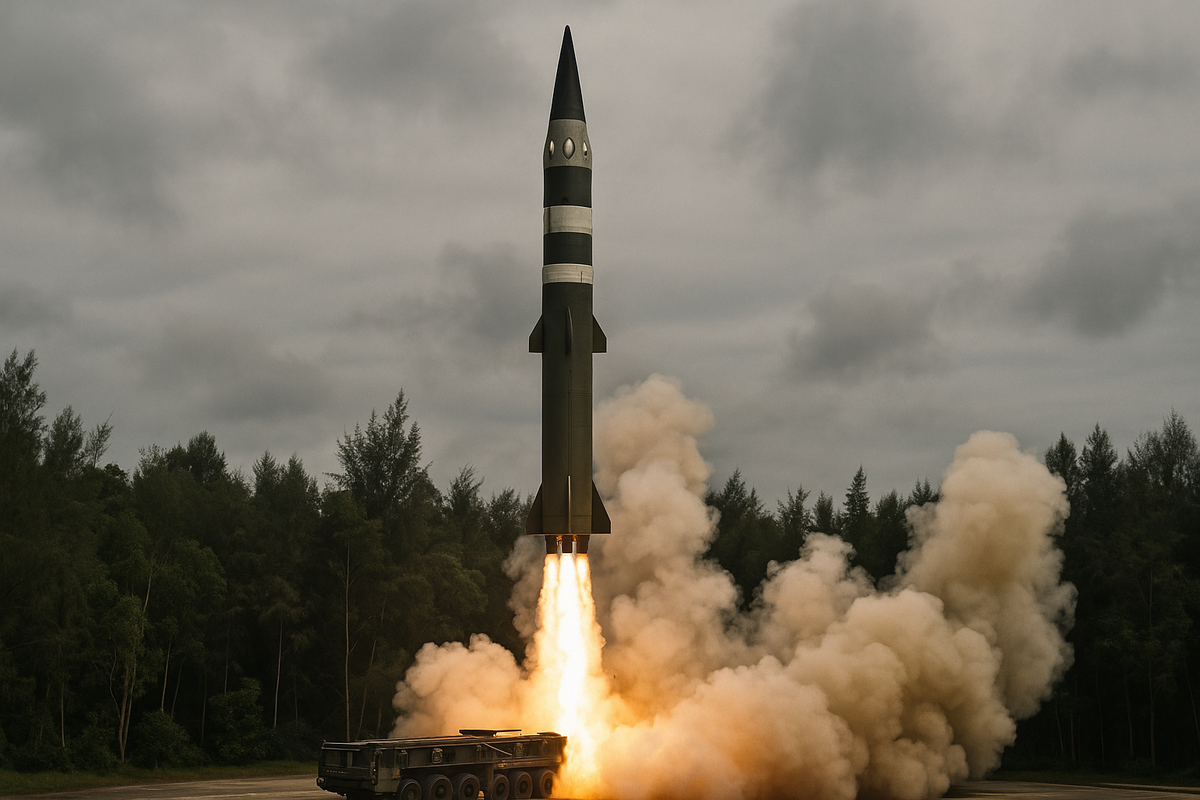
On May 8, 2026, India successfully conducted a flight trial of its Advanced Agni-5 missile, which features Multiple Independently Targetable Reentry Vehicle (MIRV) technology. This test is significant as it validated the missile's ability to execute independent targeting as well as post-boost vehicle maneuvers. The Agni-5 missile has been a cornerstone of India's strategic deterrence, and this latest trial underscores its evolving capabilities in nuclear delivery systems.
Strategic Context
The introduction of MIRV technology allows a single missile to carry multiple warheads, each capable of striking different targets. This development enhances India's deterrent posture against regional adversaries by complicating missile defense systems and increasing the potential impact of a nuclear strike. The successful trial indicates India's commitment to strengthening its nuclear deterrent and maintaining a credible second-strike capability, particularly in the face of evolving security dynamics in South Asia. Analysts will be watching how this technological advancement might influence the strategic calculations of neighboring countries.
Furthermore, the advancements in missile technology align with India’s broader defense strategy, which aims to modernize its armed forces and enhance indigenous defense production. This test serves as a reminder of India's growing military capabilities, which could prompt a reevaluation of regional military balances.
The implications of this successful test are significant. Should India continue to develop and deploy MIRV-capable systems, it may lead to an arms race in the region, as neighboring countries may feel compelled to enhance their own nuclear arsenals or missile defense systems. This raises the question of whether such advancements will lead to increased tensions or a recalibration of diplomatic dialogues in South Asia.
Sources: Armyrecognition, MSN, Eurasia Review, Defence Security Asia, and The Economic Times