Innovations in Turkish Defense Technology Showcase NATO's Future Capabilities

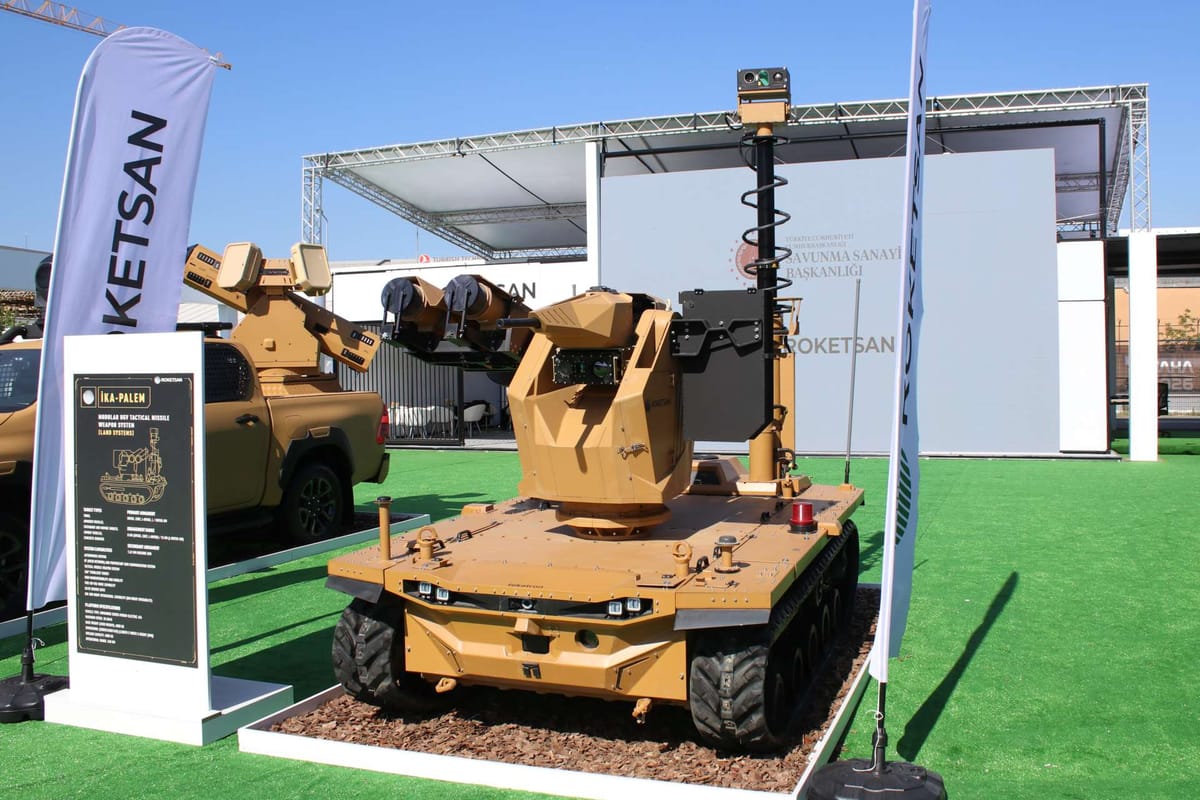
At the recent SAHA Expo 2026, Türkiye presented a series of advanced military technologies aimed at enhancing NATO’s capabilities in anti-armor warfare and long-range fire support. These developments signal a robust commitment to modernize and innovate within the framework of NATO, underscoring Türkiye’s strategic role in regional and alliance defense.
What Happened
ROKETSAN unveiled the IKA-PALEM, a missile-carrying Unmanned Ground Vehicle (UGV), marking a significant enhancement in NATO's anti-armor options. This system is designed to operate remotely, providing tactical advantages in complex combat environments. The İKA-PALEM is expected to complement existing NATO systems by offering flexibility and reducing personnel risk on the battlefield.
Additionally, Türkiye introduced the ATTILA, a new 155 mm howitzer that emphasizes high mobility in long-range artillery support. This howitzer is a part of Türkiye’s broader strategy to enhance its artillery capabilities, allowing for rapid deployment and effective fire support in various operational scenarios.
Furthermore, the mockup of Ukraine’s FP-5 Flamingo cruise missile debuted at the expo. This missile presents a potential model for NATO's deep-strike operations, reflecting a collaborative approach between NATO allies in developing advanced strike capabilities.
The Strategic Calculus
These developments are crucial as NATO faces evolving threats and the need for adaptive strategies. The introduction of the İKA-PALEM and ATTILA systems suggests a shift toward more integrated, technology-driven warfare. Key implications include:
- Enhanced operational flexibility for NATO forces in countering armored threats.
- Increased mobility and responsiveness of artillery units, crucial for modern warfare.
- Strengthened collaboration within NATO, as evidenced by the inclusion of the FP-5 Flamingo, promoting shared technological advancements.
Analysts will be watching how these innovations are integrated into NATO's existing frameworks and their impact on future military operations. The focus on unmanned systems and advanced artillery reflects a recognition of the changing nature of warfare, where technological superiority often determines operational success.
What Comes Next
As these systems transition from concept to operational status, the emphasis will likely shift toward testing and validation within NATO exercises. The integration of the İKA-PALEM and ATTILA into joint exercises could offer insights into their performance and interoperability with existing NATO assets.
Moreover, the introduction of Ukraine’s FP-5 Flamingo may lead to further discussions about enhancing deep-strike capabilities across NATO member states. This raises the question of how quickly NATO can adapt to these emerging technologies and what strategic adjustments will be necessary to fully exploit their potential.
Overall, Türkiye’s showcase at SAHA Expo 2026 not only highlights its commitment to advancing its military technology but also reinforces the collaborative spirit within NATO to address contemporary security challenges.
Sources: Armyrecognition, Defence Turkey, Zona Militar, The Jerusalem Post, and Defense Update