Leonardo’s Space Guardian: The First Proprietary Space Constellation for Earth Observation

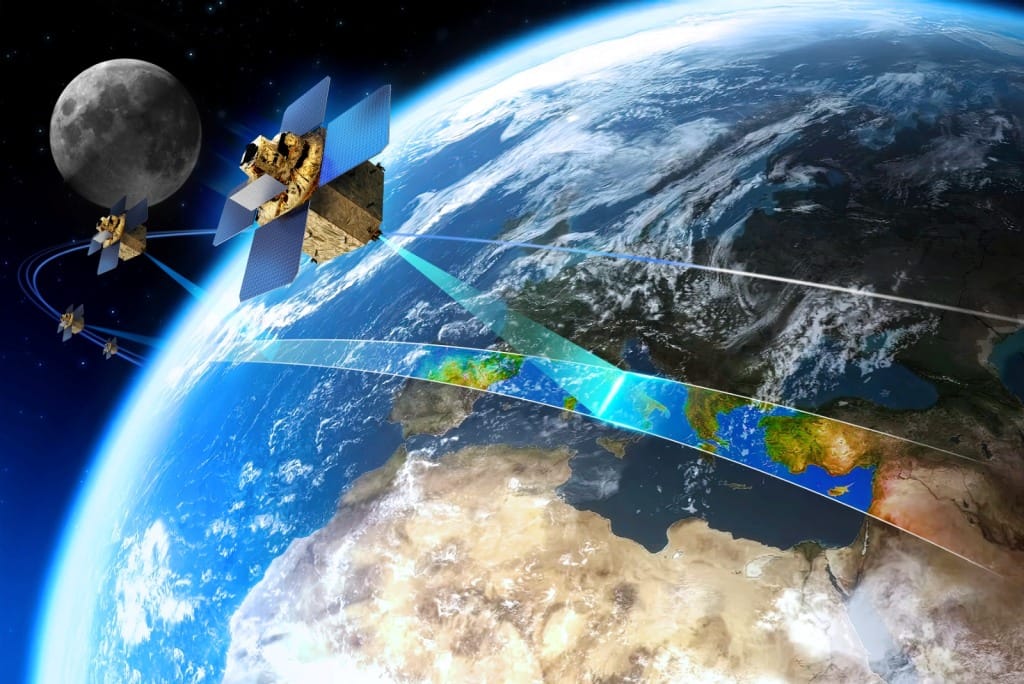
Leonardo’s Space Guardian: Transforming Earth Observation through Innovation
Overview of the Industrial Plan 2026-2030
During the recent unveiling of the Industrial Plan 2026-2030, Leonardo’s CEO and General Director, Roberto Cingolani, shared pivotal details regarding the development and anticipated launch of the company’s inaugural proprietary Earth observation constellation, termed “Space Guardian.” The initial launch window is projected for late 2027, in alignment with the strategic goals outlined in the broader industrial plan.
A New Era in Space Infrastructure
Described as a cutting-edge space infrastructure, the Space Guardian represents a significant advance in the aerospace sector, thanks in part to its integration with digital technologies. This initiative is underpinned by an internal investment estimated at approximately €500 million, a move that underscores Leonardo’s commitment to enhancing digital and sovereign space capabilities.
Key Features of the Space Guardian
- Comprehensive Digital Infrastructure: The constellation is designed as a complete digital ecosystem that will govern the data lifecycle—from acquisition through radar and optical sensors to in-orbit processing and dissemination to end-users.
- Intelligent Processing Nodes: Unlike traditional satellites that merely collect data, Space Guardian will employ a network of sophisticated nodes capable of processing and analyzing information prior to transmission. This approach enhances operational efficiency and security.
Versatile Mission Support
The constellation’s capabilities extend beyond mere Earth observation. It will support an array of critical missions, including:
- Monitoring vital infrastructure
- Maritime security operations
- Intelligence, Surveillance, and Reconnaissance (ISR)
- Civil protection initiatives
- Emergency and crisis management
Cingolani has emphasized that data derived from this constellation will play a crucial role in bolstering the ISR dimensions of the Michelangelo Dome, Leonardo’s advanced integrated defense system.
Satellite Configuration and Technological Advancements
The program envisions the deployment of approximately 20 next-generation multi-sensor satellites, designed to host supercomputing and advanced communication features in orbit. A specific focus is on:
- High-Performance Computing (HPC): These satellites will integrate HPC capabilities, enabling rapid data processing.
- Optical Intersatellite Links: This feature allows real-time data exchange, significantly reducing latency and elevating the system’s security against cyber threats.
Planned Satellite Deployment
- The initial phase comprises nine contracted satellites through Thales Alenia Space, to be constructed at the Space Smart Factory in Rome, a state-of-the-art facility showcasing advanced digital manufacturing techniques.
- Two orbital planes are planned:
- First Plane: Comprising nine satellites—six with Synthetic Aperture Radar (SAR) capabilities, two equipped with Very High Resolution (VHR) optical instruments, and one serving as a communications satellite acting as an orbital router.
- Launch Timeline: The first group is set for deployment by late 2027 to early 2028, reaching Initial Operational Capability (IOC) around Q2 2028.
Future Expansion and Ground Infrastructure
The second orbital plane, scheduled to be completed by the end of 2028 and into 2029, will add an additional 9-12 satellites, effectively achieving Full Operational Capability (FOC). The specific types of sensors for this satellite group are yet to be finalized.
Ground Segment Development
Telespazio is tasked with designing the ground segment, which will feature two proprietary control stations located in Scanzano, Sicily, and another, still under development, both projected to become operational by 2027.
Integration with Future Systems
Cingolani remarked that additional constellations are anticipated to be incorporated into the Michelangelo Dome, enhancing tracking and early warning functionalities starting in 2030. This integration will substantially augment the overall system architecture, amplifying its capabilities and performance.
Modular and Interoperable Framework
The Space Guardian constellation is designed to be modular and scalable, with the ability to integrate seamlessly with third-party systems and national or European initiatives—including Copernicus, IRIDE, and COSMO-SkyMed. This interoperability will fortify the strategic positioning of Leonardo, Italy, and Europe within the Earth observation landscape and contribute to the resilience of integrated space infrastructures.
In summation, Leonardo’s Space Guardian program signifies a transformative leap forward in satellite technology and space observation, instrumental in addressing contemporary security and environmental challenges.