Lockheed Martin Launches NGI Production Facility in Alabama

New Facility Enhances U.S. Missile Defense Capabilities
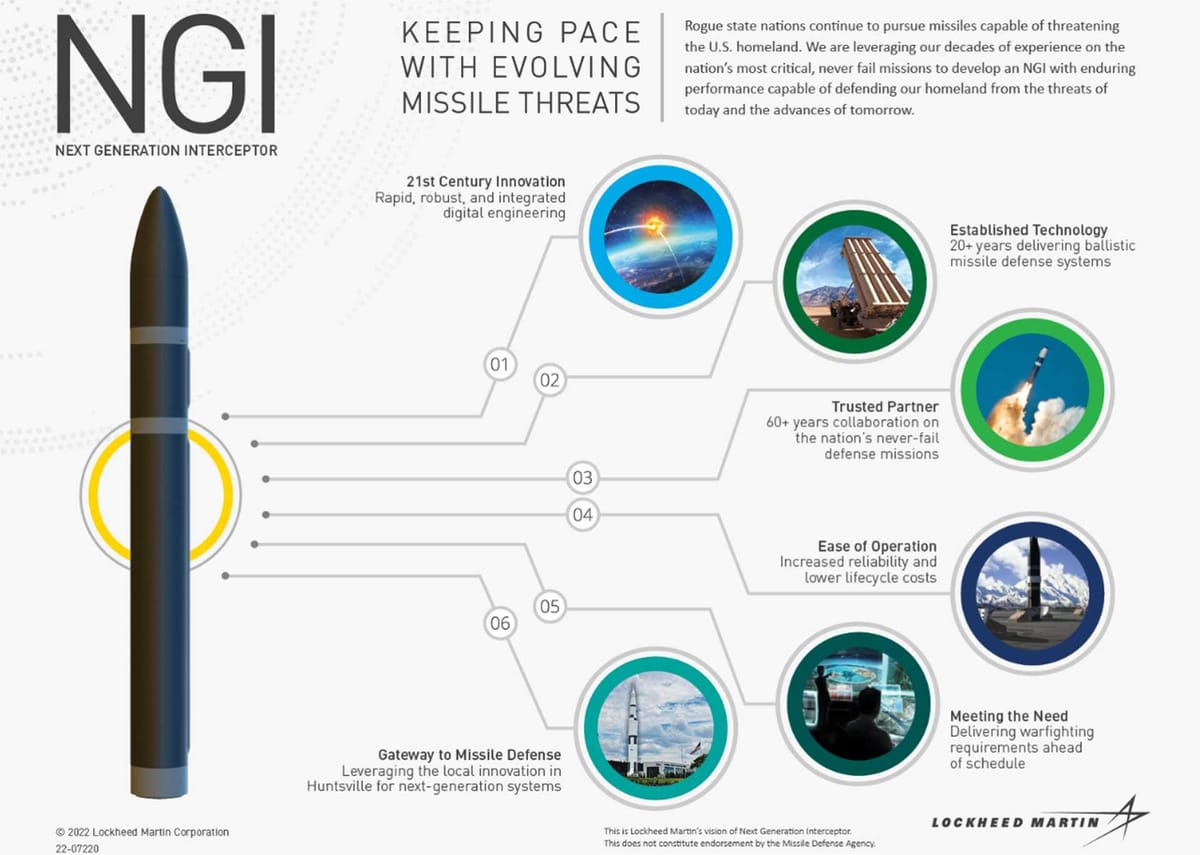
Lockheed Martin has officially opened a new manufacturing facility in Alabama dedicated to the production of the Next Generation Interceptor (NGI). This move aims to bolster the U.S. homeland defense infrastructure as the nation seeks to enhance its missile defense capabilities. The facility's launch represents a significant investment in safeguarding the United States from evolving missile threats.
The NGI program is designed to provide a more effective response to advanced missile technologies, particularly from adversaries who continue to develop and refine their capabilities. Lockheed Martin's commitment to this initiative underscores the importance of maintaining a robust defense posture. The NGI is expected to play a critical role in the U.S. missile defense strategy, particularly in light of increasing global tensions and the proliferation of missile technology.
Strategic Implications for U.S. Defense
This development raises questions about the future landscape of missile defense systems and their integration into existing frameworks. The establishment of this facility not only signifies Lockheed Martin's role in advancing defense technologies but also highlights the U.S. government's ongoing prioritization of national security measures. With the current geopolitical climate, strengthening homeland defense is a key focus for the administration.
Why it matters: The opening of the NGI production facility is a strategic move that could enhance the U.S. response capabilities against missile threats. As missile technologies continue to evolve, the implications of this initiative extend beyond production; they reflect a proactive approach to national defense. Analysts will be monitoring how this facility will impact the overall effectiveness of U.S. defense strategies and its readiness to address potential threats in the future.
Sources: Armyrecognition, Airforce Technology, The Defense Post, Design and Development Today, and Lockheed Martin