Navy E-2D Hawkeyes Deploying to the Middle East

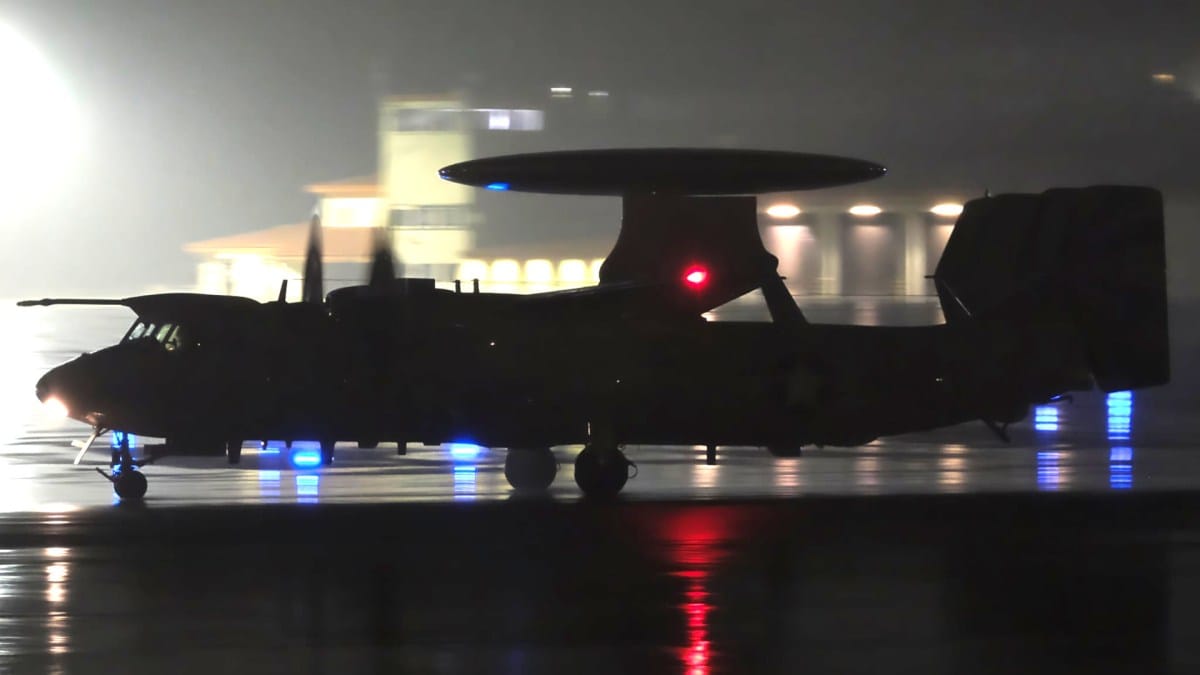
Recent Deployment of E-2D Advanced Hawkeye in the Azores
Strategic Context
A squadron of at least five E-2D Advanced Hawkeye airborne early warning and control aircraft has recently arrived in the Azores, a pivotal staging area for U.S. military operations, particularly for missions directed toward the Middle East. This deployment is noteworthy given the heightened urgency related to ongoing tensions in the region.
Significance of the E-2D
The E-2D is recognized as one of the most sophisticated airborne radar systems available within the U.S. military, capable of conducting ‘look-down’ operations. Currently, the only existing E-2Ds in the Middle East are supporting air operations for the USS Gerald R. Ford and USS Abraham Lincoln. The decision to expedite additional E-2Ds to the Persian Gulf underscores the need for enhanced surveillance capabilities, especially in light of the increasing menace posed by Iranian drone activity against Gulf States.
Comparative Deployments
Australia’s Royal Australian Air Force is also taking proactive measures by deploying one of its E-7A Wedgetail aircraft to the same region, aiming to fulfill comparable surveillance roles. Both the E-2D and E-7 aircraft are adept at identifying low-flying threats such as cruise missiles, ballistic missiles, and maritime threats. Their advanced battle management features are crucial, particularly as U.S. forces in the area contend with a deteriorating fleet of aging E-3 Sentry AWACS.
Capabilities and Logistics
Images from the airbase in the Azores confirm that these E-2Ds possess upgraded systems, including in-flight refueling capability—an advantage that significantly extends their operational range and time on station. During their journey, they were notably escorted by U.S. Air Force KC-46 Pegasus tankers, highlighting the logistical support integral to this operation.
Operational History and Current Needs
The E-2Ds, which originated from Norfolk, Virginia, and were tracked through various stages of transit, are presently earmarked for potential operations in a conflict that increasingly resembles a multi-national theater involving direct Iranian assaults on numerous Middle Eastern nations. Specifically, Iranian attacks have been observed in the strategic Strait of Hormuz, raising critical questions about maritime security.
Enhancing Aerial Surveillance
The deployment of these aircraft could significantly improve the situational awareness of U.S. forces and allied nations in the region. The E-2D’s unique capability for detecting low-signature threats makes it indispensable in countering kamikaze drones and cruise missiles. These aircraft previously demonstrated their effectiveness in the Red Sea and consistently fulfill vital roles in ensuring air superiority and situational knowledge.
Assessment of Current U.S. Capabilities
There is a notable inadequacy in the current fleet, as the aging E-3s have faced operational challenges, limiting the effectiveness of American air operations. The E-2D’s advanced radar technology surpasses that of the E-3, allowing for faster scanning, greater detection ranges, and precise tracking of agile threats—features that are increasingly critical in modern warfare where drone technology is prevalent.
Implications for Future Operations
The deployment of E-2Ds not only meets an immediate need but also raises fundamental questions about long-term U.S. strategy in the region. The decision to enhance aerial surveillance and early warning capabilities aligns with bipartisan concerns regarding the effectiveness and readiness of current operational assets, particularly given the evolving nature of threats emanating from Iran.
Conclusion
The arrival of E-2Ds in the Azores not only reinforces the strategic positioning of U.S. forces but also amplifies the need for a critical reassessment of aerial reconnaissance and early warning systems in the face of heightened threats. This operation serves as an urgent reminder of the geopolitical intricacies that characterize military engagements in the Middle East. Moving forward, the effectiveness of U.S. operations will largely depend on how well these capabilities are integrated into a comprehensive response framework aimed at addressing the multifaceted challenges presented by adversarial states.