Serbian MiG-29 Equipped with Chinese Supersonic Standoff Missiles

Serbia’s Acquisition of the CM-400 Missile: An Unexpected Development in European Defense Capabilities
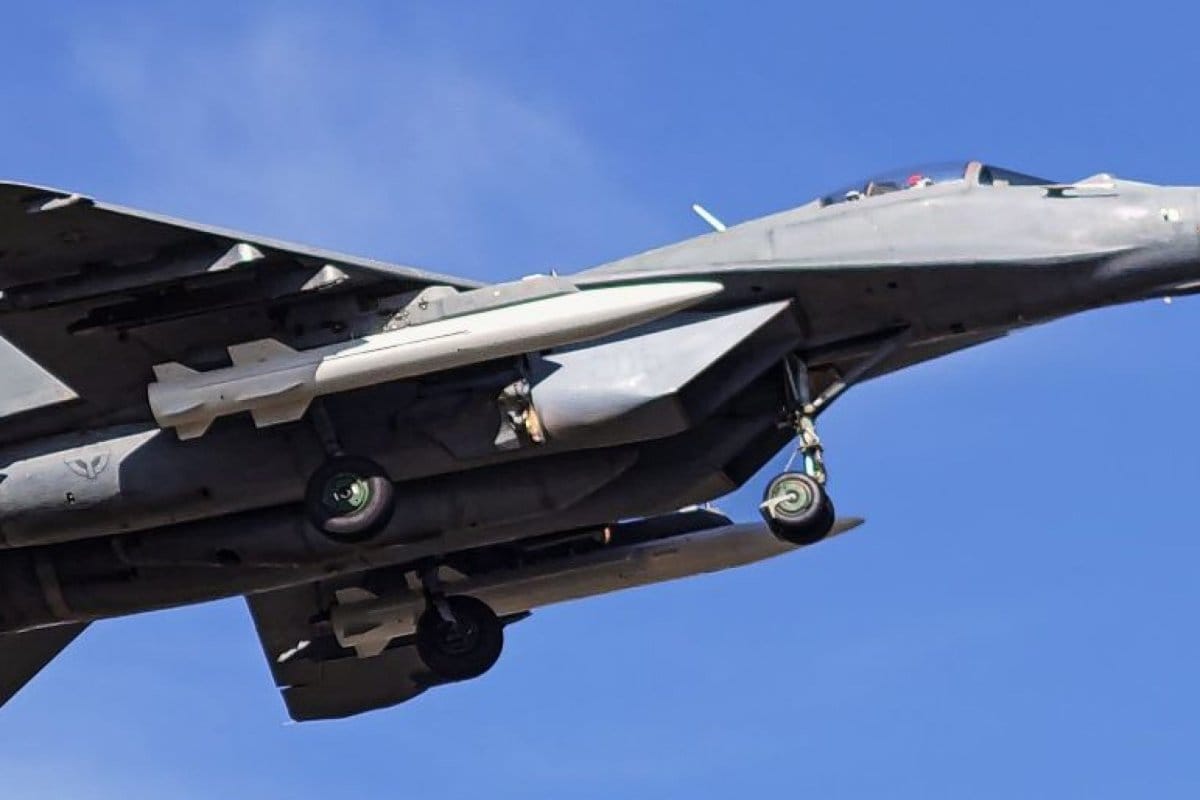
In a notable shift within the Balkan arms landscape, Serbia has integrated the Chinese-manufactured CM-400 air-launched supersonic standoff missile into its arsenal, specifically utilizing the Soviet-era MiG-29 fighter aircraft. This development positions Serbia as an operator of a missile platform that is arguably unparalleled in Europe (with the exception of Russia), marking a significant enhancement to its military capability.
Key Details on the CM-400
Recent imagery revealed a Serbian Air Force MiG-29 armed with two CM-400 missiles mounted on its underwing hardpoints. This acquisition makes Serbia the second nation globally, following Pakistan, to procure this advanced missile system.
- Specifications:
- Length: Approximately 17 feet
- Diameter: 16 inches
- Weight: Roughly 2,000 pounds
- Warhead Options: High-explosive (330 lbs) or armor-piercing (440 lbs)
- Speed: Capable of achieving Mach 4.5 in its terminal phase, though it does not classify as hypersonic (Mach 5 and above).
- Range: Reports vary, with claimed operational ranges from 155 miles to as much as 250 miles.
While initial accounts suggest it operates in a high ballistic trajectory, potentially exhibiting maneuverability in its terminal phase, the missile functions primarily as an anti-ground and anti-ship platform.
Operational Implications for Serbia
Serbian military leadership, including General Milan Mojsilović, has indicated that the nation’s air forces now possess weaponry comparable in range and lethality to systems like the Israeli-made PULS (Precise and Universal Launching System). The PULS integration into Serbia’s arsenal complements the capabilities provided by the CM-400.
- Contextual Insights: Serbia’s military modernization efforts reflect a strategic pivot away from sole reliance on traditional suppliers. With the Western sanctions on Russia affecting arms procurement, Serbia has diversified its sources, procuring military equipment not only from China but also from Israel and other Western nations.
Integrated Systems and Future Developments
The CM-400’s operational flexibility is augmented by CATIC’s Standalone Weapon Fire Control System (SWFCS), designed for seamless integration with various aircraft types, facilitating interoperability with non-Chinese platforms. This system allows air forces greater operational versatility and simplifies the process of incorporating advanced munitions.
- The SWFCS employs a wireless data interface, enabling pilots to control the missile’s launch through a tablet-like device, similar in concept to technologies used by Ukraine for integrating Western munitions into older aircraft.
Strategic Ramifications
Serbia’s acquisition of the CM-400 represents more than just an upgrade to its capabilities; it signifies a strategic repositioning within NATO’s sphere of influence and a diversification away from its historical dependencies. This move aligns with Serbia’s broader military doctrine shift, increasingly mirroring NATO operational methodologies and equipment standards.
- Regional Impact: The introduction of high-performance standoff platforms like the CM-400 poses new challenges for neighboring nations, amplifying the complexity of military dynamics in a historically volatile region.
Conclusion
Serbia’s integration of the CM-400 into its military is poised to enhance its strike capabilities significantly while demonstrating a strategic pivot towards a more diversified defense framework. With an eye on contemporary threats and the evolving security architecture, this development underscores the importance of agility and modernity within military establishments in Europe. The expanding capabilities of the Serbian armed forces warrant close observation, particularly as they navigate their relations with both Western allies and traditional partners like Russia. The implications of these advancements effectively reshape the regional security landscape, highlighting the importance of adaptation in defense policy amid shifting geopolitical tides. Source link