The World's Ugliest Airplane Has Made Its First Flight

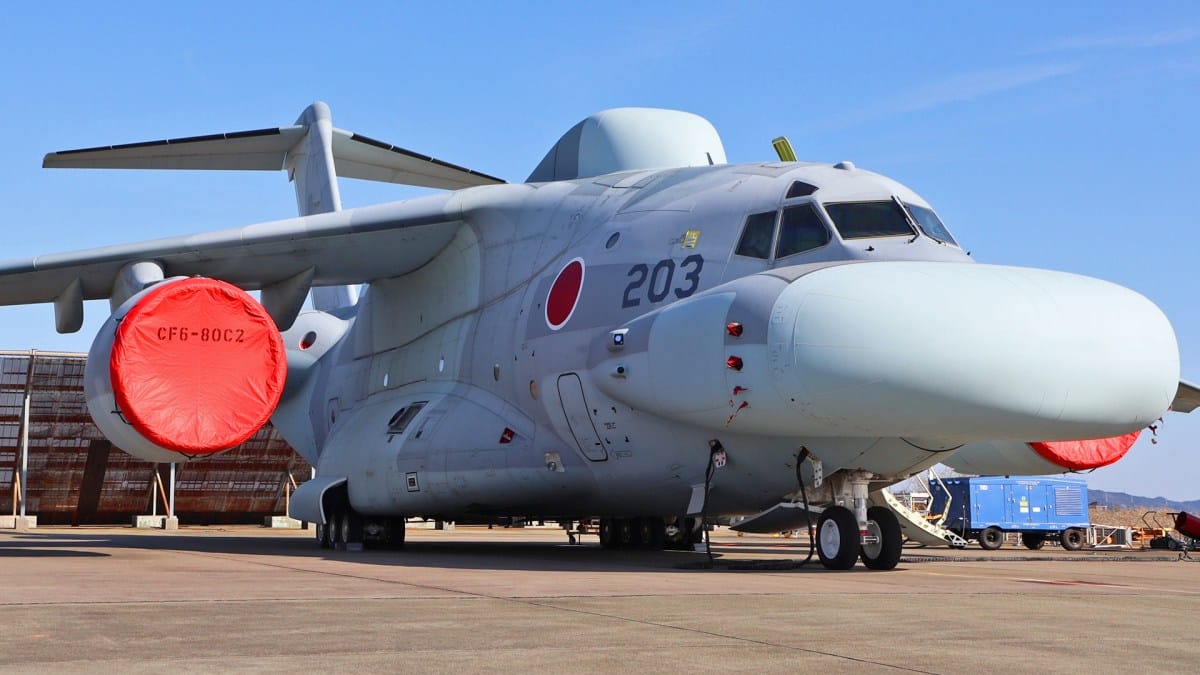
Introduction of the Kawasaki EC-2 Standoff Electronic Warfare Aircraft
The Japan Air Self-Defense Force (JASDF) has unveiled its latest asset, the Kawasaki EC-2, which is set to enhance Japan’s capabilities in electronic warfare. Though its design has garnered mixed reactions regarding aesthetics, its operational significance cannot be overstated. The EC-2 completed its first flight at Gifu Air Base, marking a pivotal advancement in Japan’s military capabilities amid escalating regional threats.
Overview of the EC-2
The EC-2 is fundamentally an evolution of Japan’s indigenous C-2 twin-jet transport aircraft. Official development commenced in 2021, with its primary function being the disruption of an adversary’s operations in the electromagnetic spectrum, executed from a standoff position beyond the effective range of air defense systems.
- Base Aircraft: The EC-2 is derived from serial 68-1203, the third C-2 transport aircraft built, which has been modified for its specialized electronic warfare role.
- Comparative Dimensions: The C-2 transport aircraft serves as a bridge between the C-17 and C-130 in terms of size and operational capacity, boasting capabilities that closely align with those of the Airbus A400M.
Advancements Over Predecessors
The EC-2 succeeds the now-retired Kawasaki EC-1, which was adapted from an existing C-1 transport airframe. The need for a modernized electronic warfare platform highlights the evolving threat matrix that Japan faces, necessitating enhanced electronic combat capabilities.
- Operational Functionality: The EC-2 is designed to operate a variety of electronic countermeasures to neutralize enemy sensors, particularly those associated with ground-based air defense and airborne platforms.
- Enhanced Features: While retaining the EC-1’s pronounced bulbous nose, the EC-2 introduces additional bulged fairings and fuselage modifications, increasing its operational versatility.
Strategic Importance
Japan’s security environment is characterized by heightened military activity from neighboring nations, including China, North Korea, and Russia. This modernization initiative is driven by several critical factors:
- Regional Stability: Chinese incursions and North Korean missile tests represent ongoing threats, necessitating advanced deterrent capabilities.
- Increased Operational Range: The EC-2’s capacity will enable proactive measures against adversarial tactics by disrupting communications and radar systems from a distance.
- Investment in Defense Infrastructure: The FY2025 Budget allocates approximately $260 million for the development of the EC-2, reflecting Japan’s commitment to modernizing its military capabilities.
Future Developments
The JASDF plans to procure four EC-2 units, superseding the capabilities of the single EC-1 previously in service. The aircraft will complement the existing reconnaissance capabilities provided by the RC-2 signals intelligence platform, which has been operational since 2020.
- Program Costs: Total expenditures for upgrading intelligence, surveillance, and reconnaissance (ISR) capabilities within the JASDF are reported to be around $3.2 billion.
- Potential for Integration: Concepts for future roles include the integration of standoff missile capabilities, potentially mirroring advancements seen in U.S. military strategies.
Conclusion
The Kawasaki EC-2 stands as a testament to Japan’s proactive approach to addressing contemporary security challenges through advanced electronic warfare capabilities. As threats evolve and intensify, the EC-2 will play a pivotal role in ensuring that Japan maintains a tactical edge in the complex operational landscape of the Asia-Pacific region. Its operational deployment will shape how the JASDF engages with adversaries and secures national interests in an increasingly dynamic defense environment.