U.S. Air Force Expands AI and Electronic Warfare Capabilities with New Contracts

The U.S. Air Force is intensifying its focus on advanced technologies to enhance its operational capabilities. Recent contract awards highlight significant investments in artificial intelligence, electronic warfare, and cutting-edge training systems that are shaping the future of air combat.
$12.1 Million Investment in AI for Doomsday Plane
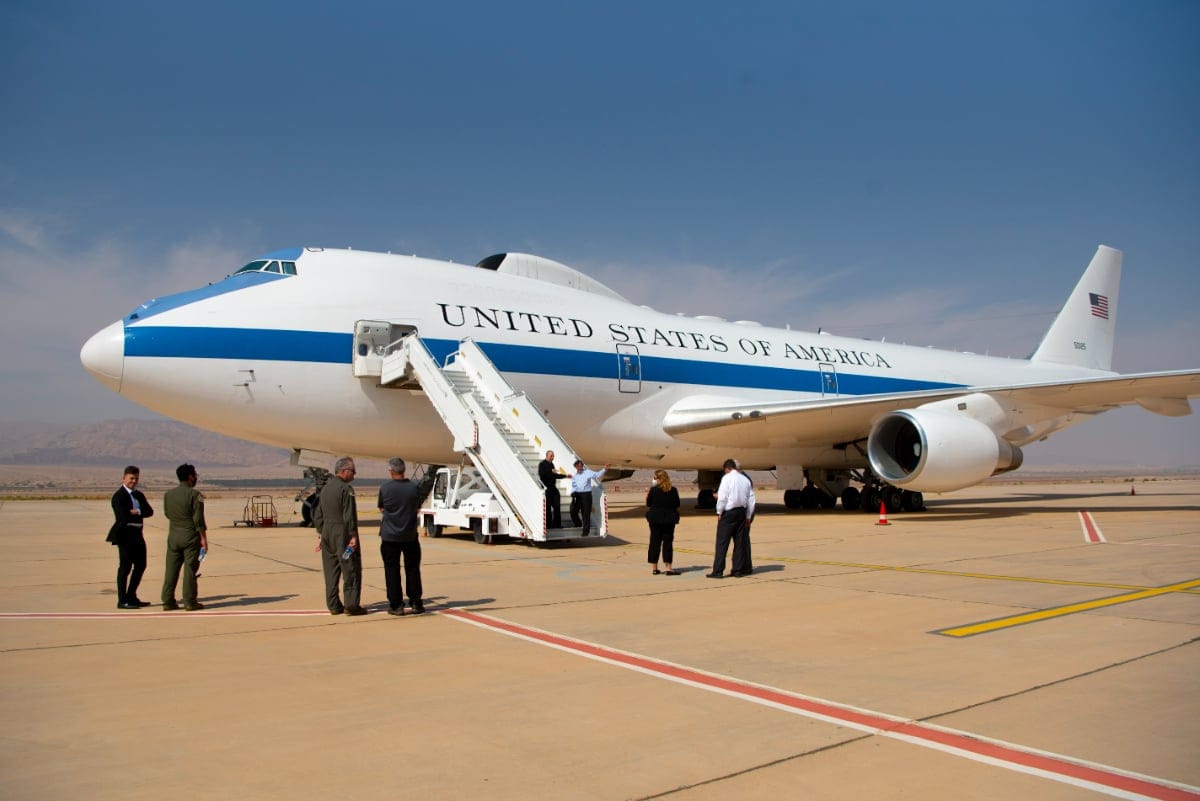
The U.S. Air Force has committed an additional $12.1 million to its contract with Scale AI, aimed at developing artificial intelligence agents for the E-4C Survivable Airborne Operations Center, commonly referred to as the "doomsday plane." This aircraft is designed to ensure that U.S. leadership can maintain command and control during a national emergency.
Modernizing the F-15EX with Electronic Warfare Suites
In a strategic move to bolster its electronic warfare capabilities, the U.S. Air Force has awarded BAE Systems a contract worth $146.7 million for 40 electronic warfare kits specifically for the F-15EX Eagle II. This sole-source contract will equip jets from the fighter's seventh and eighth production lots with advanced protective measures against enemy threats.
- Contract Value: $146.7 million
- Quantity: 40 electronic warfare kits
- Aircraft: F-15EX Eagle II
BAE Systems Expands Role in Air Force Technology
Further cementing its relationship with the U.S. Air Force, BAE Systems has received AIMS certification for its AN/APX-127(V)1 Combined Interrogator Transponder, which is now approved for use on F-16 aircraft. This certification marks a step forward in enhancing the interoperability and tracking capabilities of U.S. Air Force fighter jets.
Additionally, the U.S. Air Force Research Laboratory is collaborating with BAE Systems to explore the potential applications of pulsed lasers for military missions, seeking to integrate these technologies with existing solid-state laser systems.
Training Innovations with T-7A Red Hawk
The U.S. Air Force’s Air Education and Training Command has successfully linked a flying T-7A Red Hawk aircraft to two ground simulator cockpits. This connection aims to enhance pilot training and operational readiness, ensuring that new aviators are well-prepared for real-world scenarios.
As the U.S. Air Force continues to innovate and modernize its fleet, these developments reflect a clear commitment to integrating advanced technologies that provide strategic advantages in potential conflict scenarios.
Sources: Defence-Blog, Thedefensepost, Fortune Business Insights, twz.com, Military Aerospace, and Joint Forces News
Edited by Daniel Vazdar, Editor. How DEFCROS News reports, sources and corrects.