U.S. Army Advances Counter-Drone Capabilities with New Systems and Training

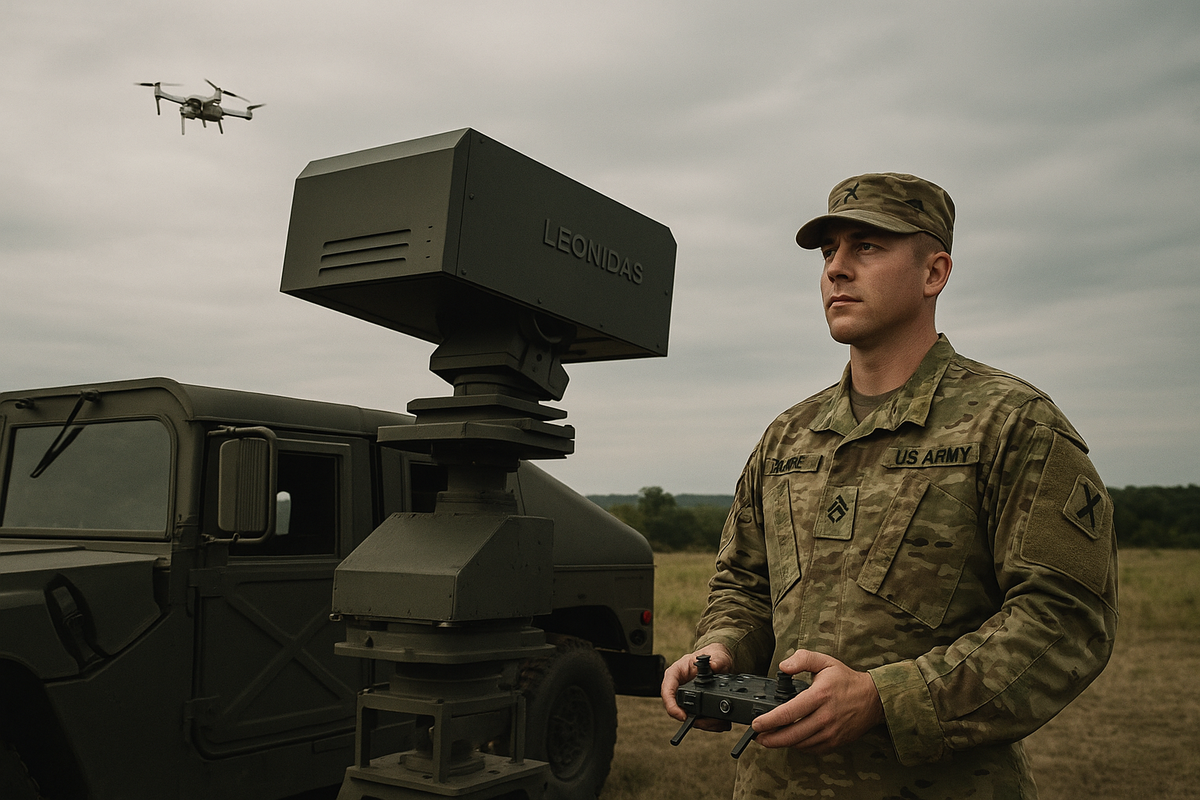
In a significant push to enhance counter-drone operations, the U.S. Army is integrating advanced systems and conducting live-fire training exercises. These developments reflect a broader trend among military forces to address the evolving threat posed by unmanned aerial vehicles (UAVs).
Integration of Leonidas Microwave Weapon
The U.S. Army has successfully integrated the Leonidas microwave counter-drone weapon into its layered air defense network. This system is designed to effectively neutralize both individual drones and massed attacks, bolstering the Army's capabilities against aerial threats.
Mobile Counter-Drone Defense Innovations
Recent exercises also highlight advancements in mobile counter-drone defense. The collaboration between the U.S. and Germany has produced two notable systems:
- SGT Stout: This U.S. system combines 30 mm guns and missiles to target drones, enhancing operational efficiency by preserving costly interceptors.
- Boxer Skyranger 30: Germany's variant similarly employs a blend of artillery and missile technology to tackle UAV threats.
Additionally, the U.S. Army conducted live-fire training for SGT Stout crews in Germany, focusing on improving short-range air defense capabilities against drones and low-altitude threats.
Global Developments in Drone Defense
Internationally, nations are also ramping up their counter-drone measures. Australia is assessing the Pandion Sentinel passive counter-drone sensors for the AS21 Redback Infantry Fighting Vehicle to enhance drone detection and force protection.
Germany introduced the Neptor drone interceptor, capable of speeds up to 350 km/h, which offers a cost-effective solution for countering mass UAV attacks. This system aims to reduce reliance on expensive missile systems.
The Netherlands is collaborating with Australian company EOS to advance the Apollo counter-drone laser, exploring local production options to establish a European supply chain.
In parallel, the United States is expanding its counter-drone defenses to protect critical infrastructure, leveraging systems like the M-LIDS Coyote KuRFS Replicator 2 for layered protection.
Moreover, the U.S. Army is testing the C100X drone for realistic battlefield threat-replication, designed to sharpen troops' readiness against modern threats.
In a related effort, U.S. Army soldiers evaluated an ISV-mounted 20 kW AMP-HEL laser at Fort Bliss, focusing on mobile operations at the southern border.
These initiatives underline a strategic shift towards comprehensive counter-drone capabilities that integrate various technologies and enhance operational readiness across the board.
Sources: Armyrecognition, Popular Mechanics, TWZ, and The Defence Blog
Edited by Daniel Vazdar, Editor. How DEFCROS News reports, sources and corrects.