U.S. Army Expands Directed Energy and Autonomous Capabilities for Enhanced Defense

The U.S. Army is advancing its defense capabilities through a series of innovative technologies aimed at strengthening military operations across various theaters. Recent developments include the deployment of autonomous high-altitude balloons, advancements in GPS-denied navigation for hypersonic aircraft, and a notable expansion of directed energy weapons for counter-drone operations. These initiatives reflect a strategic shift towards integrating cutting-edge technology into the military's operational framework.
Modular Laser Systems for Counter-Drone Operations
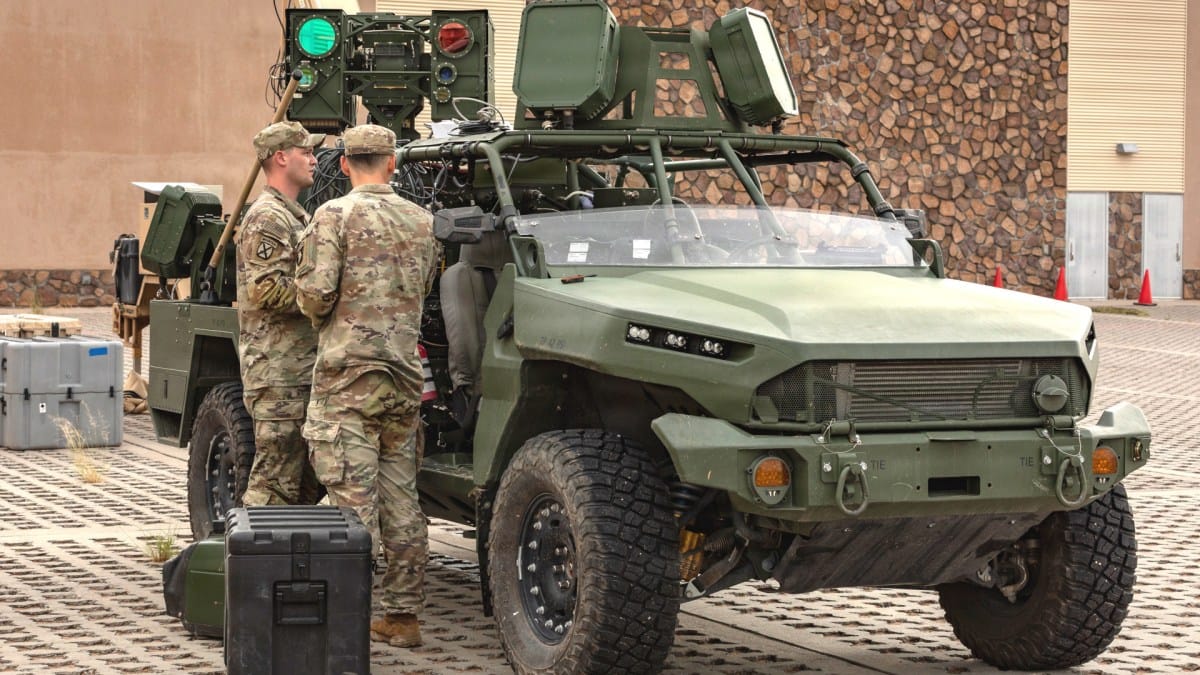
The Army is prioritizing the development of modular laser systems that can be mounted on "any vehicle in the motorpool." This approach facilitates the distribution of counter-drone capabilities across the force, allowing for enhanced operational flexibility. The modular design is crucial for effectively countering the evolving drone threats faced by U.S. forces, particularly in contested environments where traditional air defenses may be compromised.
GPS-Denied Navigation for Mach 5 Hypersonic Missiles
In a significant technological leap, the U.S. Army has successfully tested the MO-Nav Multiple Orbit Navigation system, designed for hypersonic aircraft operating at speeds of Mach 5. This system aims to maintain missile accuracy even in scenarios where enemy forces employ GPS jamming tactics. The ability to navigate effectively without GPS is a game-changer for future weapon systems, enhancing reliability and precision in targeting.
Expansion of AI-Enabled Battlefield Networks
The Army is also expanding its AI-enabled NGC2 battlefield network with contracts valued at up to $1.8 billion. This initiative targets improved military coordination across the Pacific, connecting forces and weapons to optimize operational effectiveness. The integration of artificial intelligence into command and control systems is expected to streamline decision-making processes and enhance situational awareness in dynamic combat environments.
- Deployment of dozens of autonomous high-altitude balloons to support CENTCOM operations in the Middle East.
- Operational testing of four directed energy systems, including lasers and microwave technologies, for homeland defense against drone attacks.
- Investment in AI technologies to enhance connectivity and coordination across the Pacific theater.
These advancements underscore a comprehensive strategy by the U.S. Army to leverage technology in response to evolving threats on the battlefield. The integration of high-energy lasers, hypersonic navigation systems, autonomous surveillance, and AI-driven networks positions the Army to maintain its competitive edge in modern warfare.
Sources: Twz, Armyrecognition, and Andreessen Horowitz
Edited by Daniel Vazdar, Editor. How DEFCROS News reports, sources and corrects.