Army's Last SFAB Brokers Ceasefire in Southeast Asia Amid Chinese Influence

Ceasefire Achieved Through Strategic Engagement
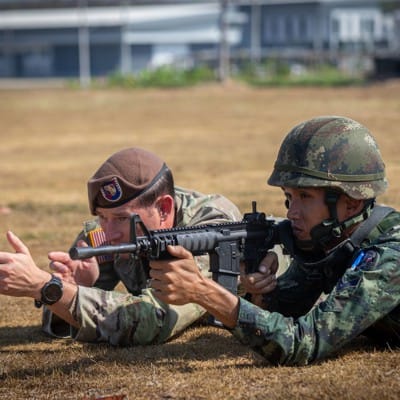
The U.S. Army's only remaining Security Force Assistance Brigade (SFAB) successfully negotiated a ceasefire in southeast Asia, marking a significant development in the region's security landscape. This initiative is part of broader efforts to counter increasing Chinese influence in the Indo-Pacific theater, a move that underscores the importance of U.S. military presence in the area.
As the last operational SFAB, this unit plays a crucial role in advising and assisting allied forces in their security operations. The unit's involvement in brokering peace reflects a strategic pivot to foster stability and cooperation among regional partners. By promoting peace through negotiation, the SFAB not only enhances the operational capabilities of local forces but also strengthens U.S. partnerships in a region characterized by complex geopolitical dynamics.
The successful establishment of a ceasefire has immediate implications for regional security. It signals a potential shift in how conflicts may be managed in the future, emphasizing diplomatic engagement over military confrontation. This development may also serve to reassure U.S. allies in the region, reinforcing the notion that the U.S. remains committed to maintaining stability in the face of rising Chinese assertiveness. The ramifications of this ceasefire could lead to enhanced collaboration among allied forces, fostering a unified front in addressing mutual security challenges.
Sources: Defenseone, Defense One, and CNA
Edited by Daniel Vazdar, Editor. How DEFCROS News reports, sources and corrects.